
PMTA Helps Identify Key Trucking Industry Reforms at Sen. McCormick's Red Tape Dialogues

PMTA Helps Identify Key Trucking Industry Reforms at Sen. McCormick's Red Tape Dialogues
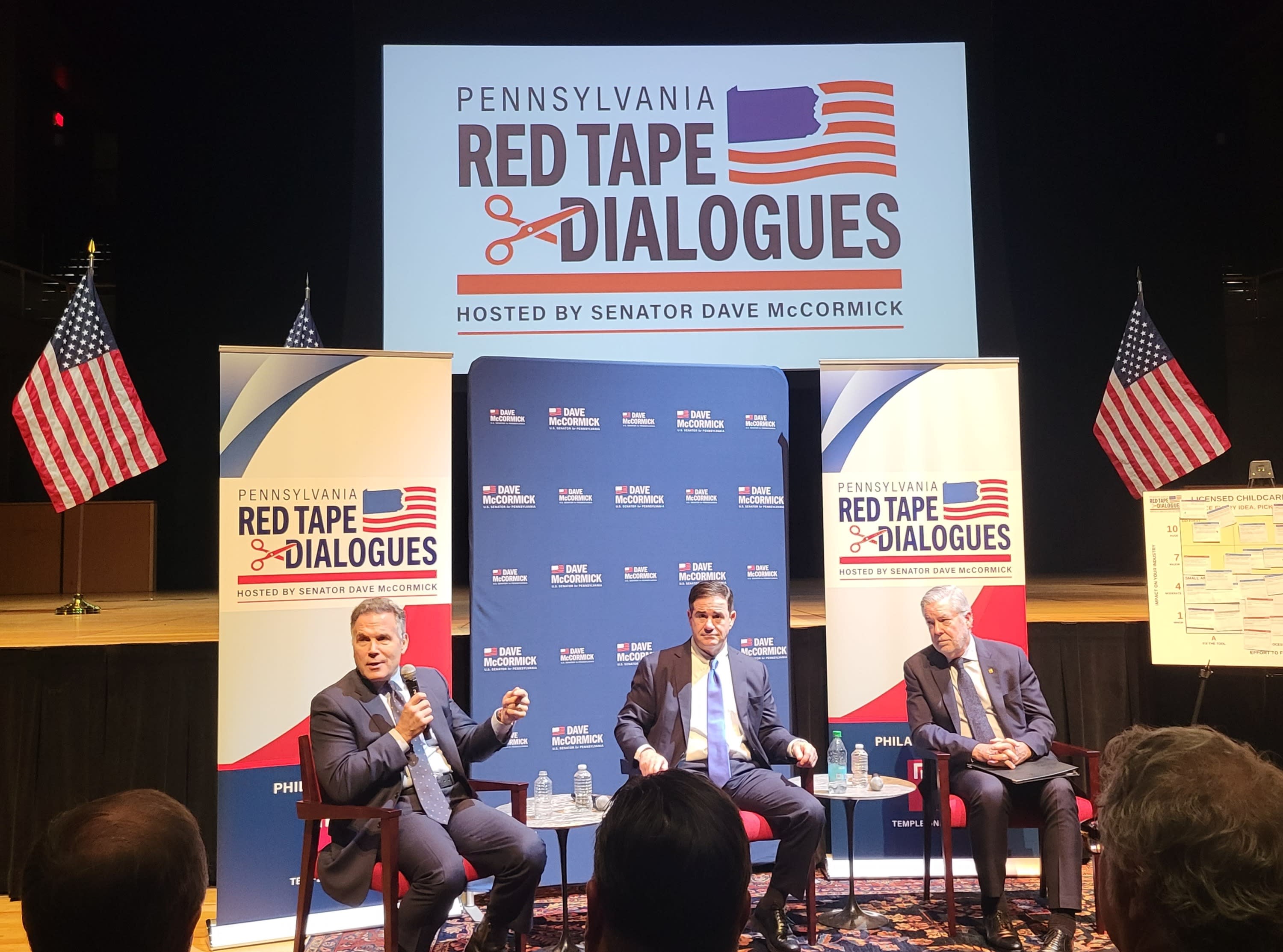
The Pennsylvania Motor Truck Association (PMTA) joined business and industry leaders from across the Commonwealth on October 15 at Temple University in Philadelphia for U.S. Sen. Dave McCormick's Pennsylvania Red Tape Dialogues, an initiative aimed at identifying unnecessary regulations and other barriers to business growth.
The event brought together nearly 100 business leaders, government officials, and industry experts to discuss opportunities to reduce unnecessary burdens, encourage investment, and strengthen Pennsylvania's economy. Former Arizona Gov. Doug Ducey also participated, sharing his experience with regulatory reform.
For Pennsylvania's trucking industry, the discussion was particularly important. Trucking is one of the nation's most heavily regulated industries, with companies navigating extensive federal and state requirements governing vehicle operations, driver qualifications, equipment, safety, and business practices.
While many of these requirements serve important safety purposes, others create unnecessary costs, administrative burdens, and operational challenges. These burdens can be especially difficult for small businesses, which make up the vast majority of Pennsylvania's more than 72,000 trucking companies.
"Trucking companies understand the importance of regulations that protect highway safety, but unnecessary or outdated requirements can make it harder and more expensive to operate," said PMTA President & CEO Rebecca Oyler. "We appreciate the opportunity to bring practical, real-world solutions to the table and help identify changes that would allow Pennsylvania's trucking businesses to operate more efficiently and grow."
Industry Leaders Identify Three Priorities
Ahead of the event, participants in the Transportation & Logistics workgroup submitted 36 recommendations addressing regulatory burdens, government processes, and legal and policy barriers affecting the trucking industry.
The proposals covered a wide range of issues, including vehicle inspection requirements, driver qualifications, federal safety oversight, electronic logging devices, fuel-tax administration, and independent contractor relationships. Some recommendations could be addressed through regulatory or administrative changes, while others would require legislative action.
During the workgroup session, participants discussed the proposals and reached agreement on three priority reforms:
1. Eliminate Pennsylvania's unnecessary additional inspection requirement for interstate trucks.
Pennsylvania-registered trucks operating in interstate commerce must meet the state's inspection requirements, even if they have already passed a qualifying federal annual inspection elsewhere. While a Pennsylvania inspection can satisfy the federal annual requirement, Pennsylvania does not provide the same recognition to federal inspections performed outside the state.
For carriers whose trucks operate across state lines and may rarely return to Pennsylvania, this creates unnecessary costs, scheduling challenges, and operational disruptions.
The workgroup recommended allowing a current federal annual inspection to satisfy Pennsylvania's inspection requirement for apportioned trucks operating in interstate commerce, while retaining state inspection requirements for intrastate-only vehicles.
2. Create a pathway for qualified 18- to 20-year-old drivers to operate in interstate commerce.
Federal law generally prohibits commercial drivers under age 21 from operating across state lines, even though qualified drivers ages 18 to 20 can already operate commercial vehicles within their home states.
This restriction creates an inconsistency in which a young Pennsylvania driver can legally operate a truck hundreds of miles within the Commonwealth but cannot make a much shorter trip across a state line.
The workgroup recommended establishing a safety-focused pathway for qualified younger drivers to enter interstate commerce, helping expand career opportunities and strengthen the industry's future workforce.
3. Strengthen FMCSA's ability to oversee the trucking industry and combat fraud.
The Federal Motor Carrier Safety Administration (FMCSA) plays a critical role in ensuring that motor carriers operate safely and comply with federal requirements. However, gaps in oversight, outdated systems, and fraudulent operators can undermine both safety and fair competition.
The workgroup supported ensuring that FMCSA has the resources, technology, and enforcement tools necessary to identify fraudulent operators, strengthen oversight of new entrants, and hold noncompliant businesses accountable. Proposals such as the SAFER Transport Act offer potential opportunities to improve the integrity of federal motor carrier registration and oversight systems.
Lawsuit Abuse Identified as an Overarching Industry Challenge
In addition to the three priorities, workgroup participants agreed that lawsuit abuse represents one of the most significant challenges facing the trucking industry.
Rising litigation costs, large verdicts, and concerns about venue shopping are contributing to increasing insurance expenses and financial uncertainty for motor carriers. Even companies with strong safety records are experiencing substantial insurance cost increases, limiting resources available for equipment, employees, safety investments, and business expansion.
PMTA has made lawsuit abuse reform a major advocacy priority, emphasizing that rising litigation and insurance expenses affect not only trucking companies but also the consumers and businesses that depend on freight transportation.
PMTA Members Play an Active Role
PMTA was well represented in the Transportation & Logistics workgroup, with association President & CEO Rebecca Oyler joining leaders from several member companies, including Ryan Garber, President & CEO of GFI Transport; Kellie Heffley, Safety & Compliance Director of Horwith Trucks; Jeff Jackson, President of Penske Logistics; Peter Latta, Chairman & CEO of A. Duie Pyle, Inc.; John Moran, President & CEO of Moran Logistics; and Gregg Troian, President of PGT Trucking.
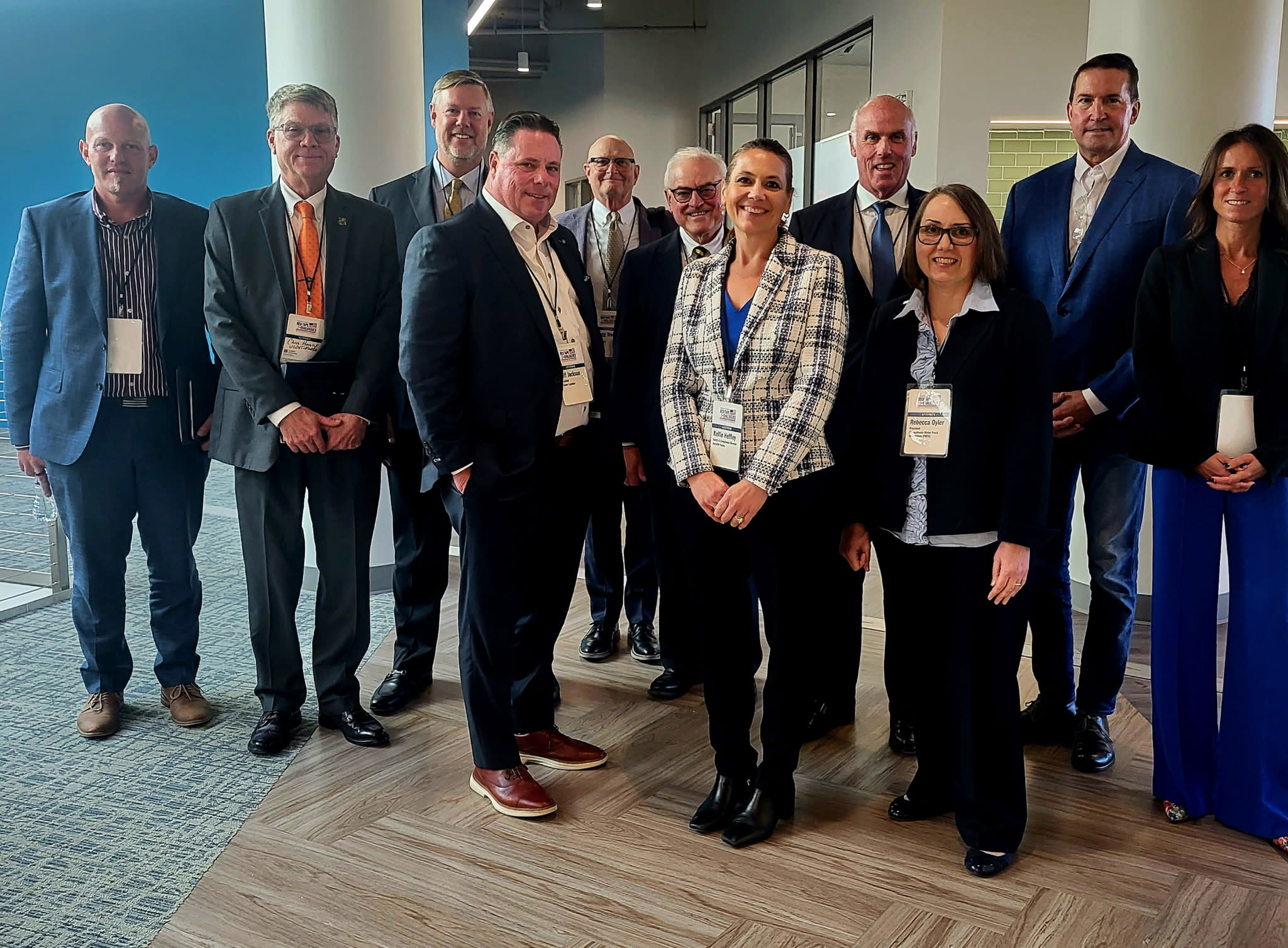
Brian Wanner, President of Peters Brothers, Inc. and a PMTA Board member, also contributed recommendations in advance of the event.
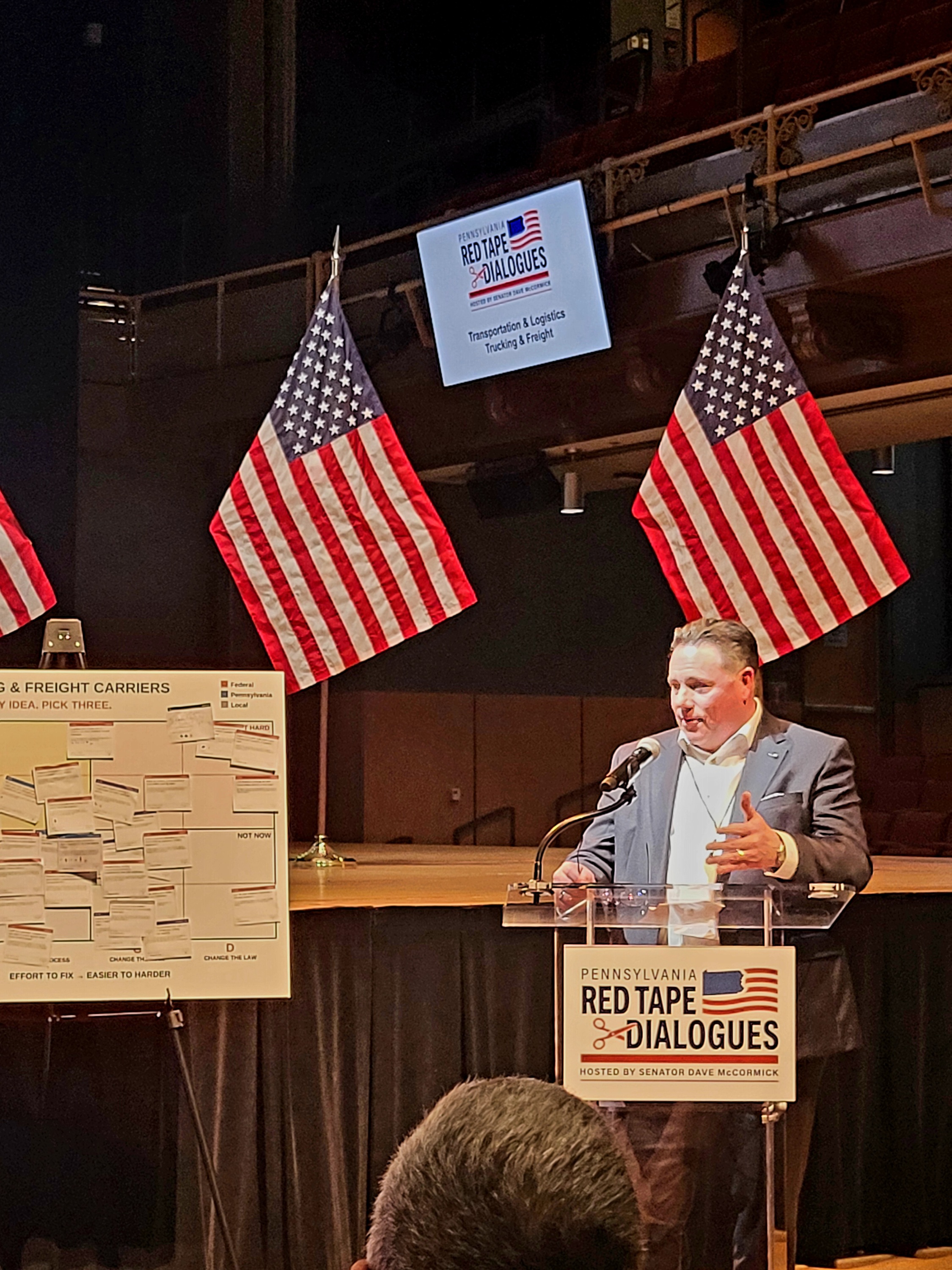
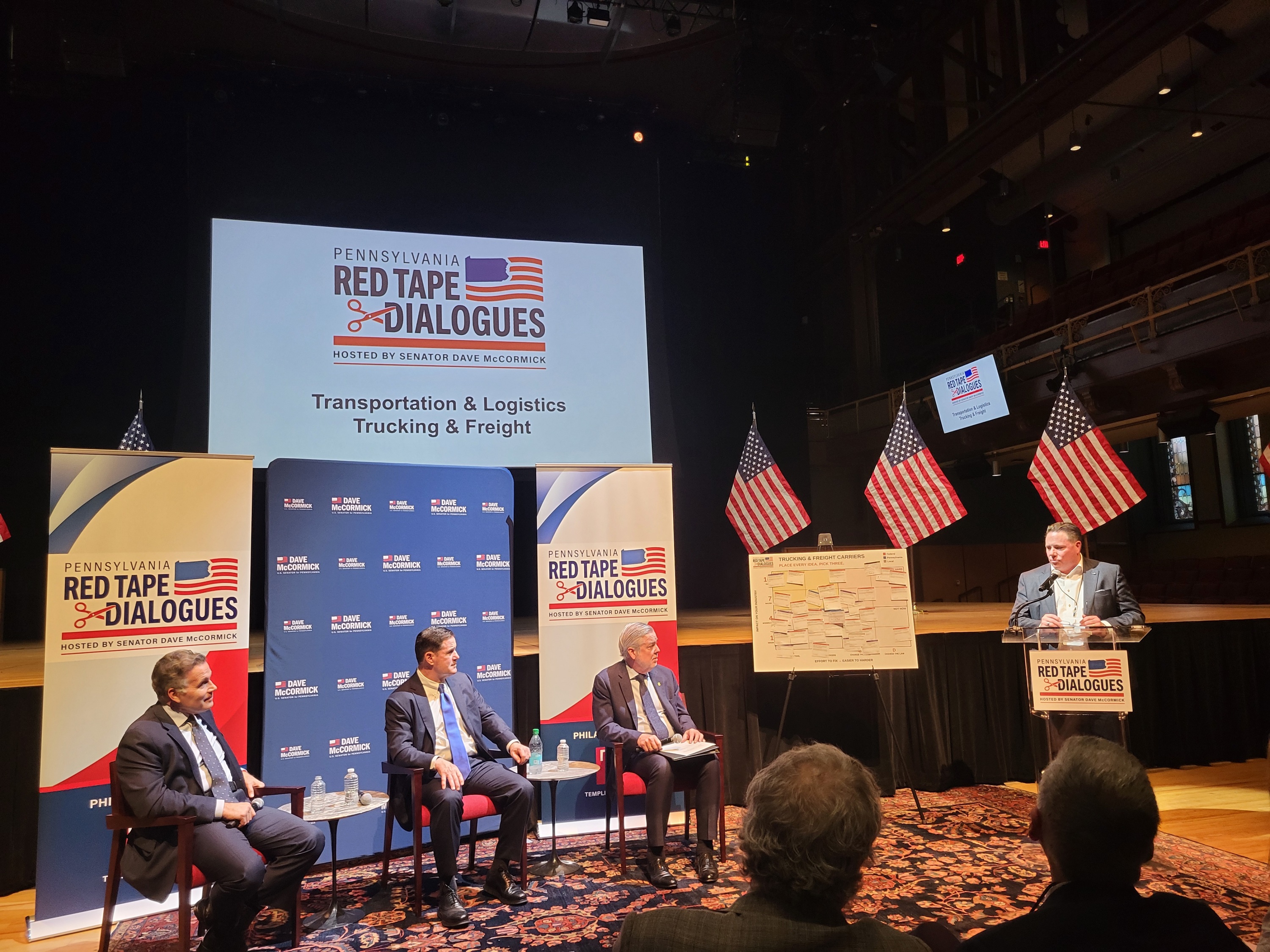
Jackson was selected to present the workgroup's recommendations to Sen. McCormick and former Arizona Gov. Doug Ducey, highlighting Pennsylvania's truck inspection requirements and the broader impact of lawsuit abuse on the industry.
Moving From Recommendations to Action
Sen. McCormick has committed to publishing a report within 60 days identifying specific reforms and next steps emerging from the Red Tape Dialogues, with plans to publicly track progress on the recommendations.
For PMTA, the event provided an opportunity to work alongside member companies and other transportation and logistics leaders to identify practical changes that could improve the operating environment for Pennsylvania's trucking industry.
"Reducing unnecessary red tape doesn't mean compromising safety," Oyler said. "It means taking a hard look at requirements that no longer make sense, eliminating unnecessary costs, and removing barriers that make it harder for businesses to operate and grow. That's good for trucking businesses, especially small businesses, and it's good for Pennsylvania's economy."
PMTA looks forward to reviewing the recommendations that emerge from the Red Tape Dialogues and continuing to advocate for reforms that support a safe, competitive, and economically strong trucking industry.