Pennsylvania Turnpike Toll Increase Continues to Reflect Longstanding Funding Challenges
Pennsylvania Turnpike Toll Increase Continues to Reflect Longstanding Funding Challenges
Beginning January 4, the Pennsylvania Turnpike will implement a 4% toll increase, the 18th consecutive annual adjustment to toll rates, but the lowest rate increase since 2014. Toll increases are largely driven by longstanding, state-mandated financial obligations.
Beginning in 2007, the General Assembly required the Pennsylvania Turnpike Commission to borrow billions of dollars to fund annual payments to PennDOT. That decision resulted in approximately $16 billion in long-term debt, a burden that continues to influence toll policy today
Act 44 of 2007 called for PennDOT to turn over Interstate 80 to the PA Turnpike Commission, which would send the tolling proceeds from the highway to PennDOT to fund repairs to highways and bridges and for mass transit agencies.
But the plan fell apart. Act 44 required the Turnpike to begin payments to PennDOT before the federal government could approve or deny the I-80 transfer. The federal government denied the request to toll I-80, but the Turnpike was still obligated to make the payments
Despite changes in subsequent laws that reduced the annual payment, the massive debt remains, and the Turnpike Commission is required to increase tolls annually through at least 2053 to fulfill its obligations.
At the same time, the Turnpike has made clear efforts in recent years to modernize its system and respond to the needs of commercial carriers, recognizing the critical role trucking plays in Pennsylvania’s economy.
What the Increase Means for Trucking
Under the new rates, the most common commercial vehicle using E-ZPass will see the cost of a full Turnpike trip from the Ohio border to the New Jersey border increase from $209.56 to $218.24. Toll-By-Plate rates remain significantly higher, underscoring the importance of E-ZPass for commercial operations.
Despite these increases, commercial traffic on the Turnpike is up 12.3%, even as passenger traffic remains below pre-pandemic levels. Commercial vehicles continue to be the Turnpike’s most dependable revenue source, with about 50% of the Turnpike’s total toll revenue coming from commercial vehicles.
Turnpike Modernization and Trucking Benefits
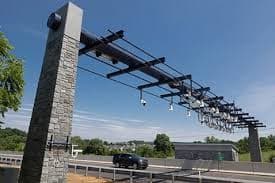
The Turnpike’s transition to all-electronic, open-road tolling, which began in January 2025 and is scheduled to be complete in January 2027, is intended to improve safety, reduce congestion, and lower long-term operating costs. Tolls under open-road tolling are based on miles traveled and the number of overhead gantries passed, rather than traditional toll plaza entry-to-exit pricing. Commercial vehicles are charged based on their height and number of axels, rather than weight.
Though the changes have brought challenges for some truckers, they also offer benefits, including free-flow traffic, reduced idling, and improved safety. The removal of toll plazas is also creating opportunities to repurpose land at interchanges—potentially adding much-needed truck parking, a long-standing issue raised by PMTA members.
The Turnpike estimates the move to overhead gantries will save approximately $25 million annually, helping to control future cost pressures.
Toll Leakage Remains a Shared Concern
Even as compliant users continue to pay their tolls, the Turnpike faces ongoing challenges with toll leakage, or uncollected toll revenue. In the most recent fiscal year, unpaid tolls increased from $195 million to $237 million, representing 7.8% of total toll revenue.
A significant portion of this leakage stems from Toll-By-Plate users, who make up 13.7% of motorists but account for 40.9% of unpaid tolls. Commercial carriers, who overwhelmingly use E-ZPass and pay their tolls consistently, are not the primary source of this problem.
Progress on Enforcement
The Turnpike, with support from the General Assembly, has taken steps to improve toll collection. State law now allows vehicle registration suspensions once unpaid tolls reach $250, and the Turnpike is working with the Attorney General’s Office to pursue civil action against chronic non-payers.
These efforts are beginning to show results, with $6.5 million in past-due tolls collected in the first quarter of the current fiscal year—more than double the amount collected during the same period last year.
PMTA’s Perspective
PMTA recognizes the difficult position the Pennsylvania Turnpike is in and acknowledges the steps it has taken to modernize operations and better accommodate commercial vehicles, particularly its commitment in 2025 to add approximately 600 new truck parking spaces. At the same time, PMTA members remain deeply interested in ensuring fairness across the system.
PMTA has supported and continues to support efforts to reduce toll leakage, because when tolls go unpaid, compliant users—particularly the trucking industry that provides half of all Turnpike revenue—ultimately bear the cost. Addressing leakage is an important part of limiting future toll increases for everyone.
PMTA will continue working with Turnpike leadership and policymakers to advocate for fair, transparent tolling practices that recognize the essential role trucking plays in keeping Pennsylvania moving.