
Insurance Costs Continue to Climb Despite Safer Trucks, New ATRI Report Finds
Insurance Costs Continue to Climb Despite Safer Trucks, New ATRI Report Finds
Escalating litigation and nuclear verdicts are increasing costs for carriers, consumers, and the supply chain alike
The trucking industry has invested billions of dollars into safety technology, driver training, and compliance programs over the last two decades. Fatal crash rates involving large trucks have declined significantly over time, and modern commercial vehicles are safer than ever before. Yet despite those improvements, trucking companies across Pennsylvania and the country continue to face rapidly rising insurance costs that are threatening businesses of every size.
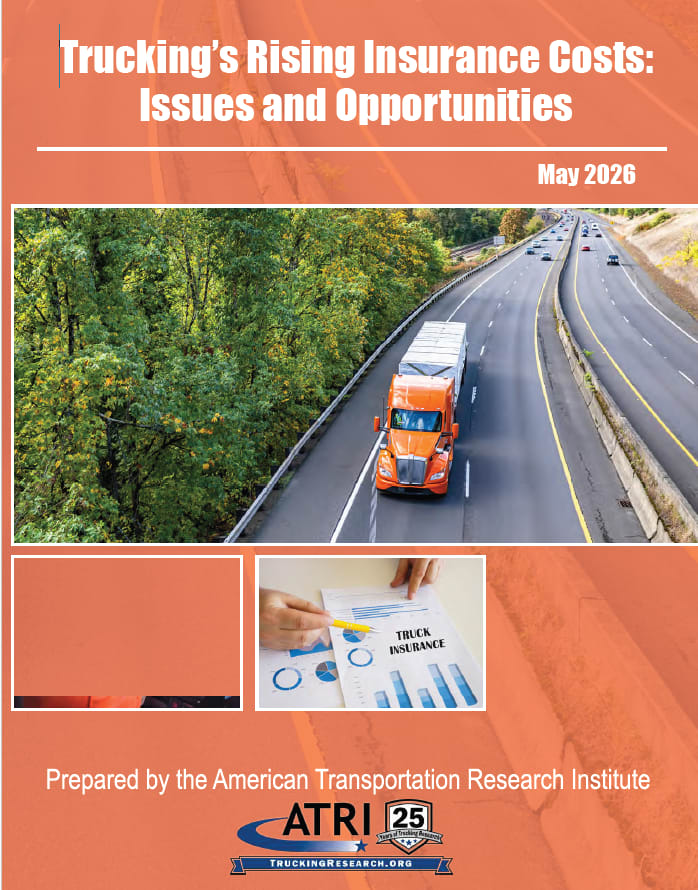
A new report from the American Transportation Research Institute (ATRI), Trucking’s Rising Insurance Costs: Issues and Opportunities, confirms what many motor carriers have experienced firsthand: insurance premiums are increasing far faster than crash rates, and the primary drivers are increasingly tied to litigation trends and escalating claim costs rather than deteriorating highway safety.
According to ATRI, industry-average liability insurance costs increased nearly 38 percent between 2015 and 2024, reaching a record-high cost of more than 10 cents per mile. In some sectors and fleet sizes, average liability costs rose by more than 50 percent.
At the same time, truck-involved crash rates have generally declined. ATRI found that injury crash rates involving heavy trucks were more than 15 percent lower in 2024 than they were in 2019, while fatal crash rates were nearly 14 percent lower than 2019 levels.
That disconnect is one of the report’s most significant findings.
Although truck crash rates rose modestly from 2021 through 2024 as highway traffic normalized after the pandemic, ATRI found that overall heavy truck crash rates remain significantly below pre-pandemic levels. Yet during that same period, liability losses increased 33.1 percent — more than four times faster than crash rates — highlighting the growing impact of litigation costs and nuclear verdicts on trucking insurance premiums.
ATRI points to several major contributors, including “social inflation,” third-party litigation funding, aggressive plaintiff tactics, and the continued growth of nuclear verdicts. The report notes that social inflation reached a 20-year high in 2023, while trucking litigation payouts have been increasing at an annual rate roughly two to three times higher than inflation.
The report also found that insurance costs associated with higher layers of excess liability coverage — particularly between $10 million and $20 million — are rising at some of the fastest rates in the market, signaling that catastrophic verdicts are increasingly penetrating deeper into insurance towers. ATRI concluded that insurance coverage once intended primarily for rare catastrophic losses is increasingly functioning more like primary coverage due to the frequency and severity of modern litigation outcomes.
For Pennsylvania trucking companies, these trends are especially concerning.
Pennsylvania has long been cited as one of the nation’s most challenging legal climates for businesses. The state continues to appear on the American Tort Reform Association’s Judicial Hellholes list, with Philadelphia’s Court of Common Pleas once again ranking among the most concerning jurisdictions in the country for excessive litigation activity. At the same time, ATRI’s research confirms that trucking companies operating in highly litigious states often face substantially higher insurance costs due to increased legal exposure.
The financial impact is falling hardest on small and mid-sized carriers — the companies that make up the backbone of Pennsylvania’s trucking industry. ATRI found that fleets with 5 to 25 trucks experienced the highest average per-mile premium costs in 2024, while fleets with 26 to 100 trucks saw premium costs increase by more than 50 percent between 2020 and 2024. Fleets with fewer than 100 trucks spent a median 4.8 percent of total revenue on liability premiums in 2024 alone.
These rising costs come during an already difficult economic environment for trucking companies, many of which continue to navigate a prolonged freight recession, high operating costs, and ongoing economic uncertainty.
The consequences extend far beyond trucking companies themselves. Higher insurance costs ultimately affect the entire supply chain, increasing the cost of moving goods and placing additional pressure on consumers and businesses alike.
The report also found that many fleets are increasingly forced to assume more financial risk themselves in order to keep coverage affordable. Companies are raising deductibles, expanding self-insurance, or reducing coverage growth even as their operations expand. One-third of fleets surveyed reported needing additional layers of insurance simply to maintain the same coverage limits they carried previously.
While the report strongly reinforces the need for meaningful litigation reform, ATRI also emphasized that safety investments remain critically important — particularly for smaller trucking companies.
Fleets that prioritize strong safety cultures, ongoing driver training, modern safety technologies, and proactive risk management generally achieve better long-term insurance and operational outcomes. Investments in tools such as dash cameras, telematics, collision mitigation systems, and comprehensive hiring and training practices can help reduce crashes, improve claims defensibility, and demonstrate a company’s commitment to safety.
For smaller carriers especially, those investments can play an important role in managing risk in an increasingly difficult insurance environment.
At the same time, ATRI’s findings make clear that safety improvements alone cannot fully offset the broader impact of lawsuit abuse and social inflation. Even highly safety-conscious fleets are facing substantial increases in insurance costs driven by factors outside their direct control.
Pennsylvania’s trucking industry remains committed to improving safety performance and investing in safer operations. However, the ATRI report demonstrates that meaningful reforms addressing lawsuit abuse, excessive verdicts, and litigation practices must also be part of the conversation if the industry hopes to stabilize insurance costs moving forward.
The full ATRI report, Trucking’s Rising Insurance Costs: Issues and Opportunities, is available through the American Transportation Research Institute.
Research like this is only possible through industry support, and PMTA encourages members to consider contributing to ATRI’s important work on behalf of the trucking industry.